Keep up to date

Keep up to date with the latest posts David's Bat Blog on Facebook

Showing posts with label bat surveys. Show all posts

Wednesday, 6 October 2021

Seasonal field ecologists - the future of ecology


Part of our 2016 team at a training event. This group includes three future PhDs, four future consultant ecologists, four who went on to work with conservation NGOs and one who now works in wildlife rehabilitation.

In 2010 our company (David Dodds Associates Ltd) first began recruiting and training our specialist team of seasonal field ecologists who usually work with us for between two and four seasons. We tend to recruit early-career ecologists, undergraduate and postgraduate students or recent graduates and this gives a dual benefit. We can train them to carry out bat surveys to our specific standards and methods and we are also able to shape the future of professional ecology and equip some of the next generation of professional ecologists with a sound knowledge of bat conservation and ecology. To date 124 people have worked with us and many are now working in consultancies, SNCOs, NGOs etc in the UK and abroad, giving me a great deal of personal satisfaction, watching their careers progress.

We aim to maximise the benefit to our team of working with us, as this helps build a committed and enthusiastic team:

  1. We provide our seasonal field ecologists with full training at the start of their career and commit to ensuring that, when they leave us they have as sound and as broad a knowledge of bat conservation as possible and we do this in several ways:
  2. Every survey is treated as a training opportunity, with the site discussed beforehand, in terms of bat suitability, habitat etc.
  3. Each seasonal field ecologist has one-to-one time with the lead ecologist during virtually every survey, to discuss the survey and results and broader questions of bat ecology and conservation.
  4. We aim to provide additional training and resources, beyond that required for the specific work of the field ecologists, giving them opportunities to get involved in winter hibernation surveys, bat box checks and so on.
  5. More experienced members of our team are given the opportunity to train for bat licenses in-house, if they wish.
  6. We run a long-term project at Whitmuir organic farm, near Penicuik, where members of the team have the opportunity to get involved in advanced bat survey techniques such as harp-trapping, use of acoustic lures, radio-tracking etc.

We try to foster a team spirit amongst our field ecologists and reward success. We have lively (and often irreverent) private social media groups on Whatsapp and Facebook, we host an annual all-expenses dinner for the team and most importantly there is our ‘donut policy’. This states that, at urban surveys, surveys with low bat activity or ones with potentially irritating interactions with the public, donuts are provided at the end as a morale-raiser (on occasions pain au chocolat are substituted at dawn).


A post-survey donut feeding frenzy after a sunset survey in a rough urban area.

I always remind team members that they are intelligent, capable people. Just because they are at an early stage of their careers doesn't mean they can't have a good idea or spot a weakness in what we do. In fact, coming to it with fresh eyes means they are more likely to do so and we've adopted numerous suggestions and enhancements over the years. This approach of constant improvement ensures we keep reviewing and improving what we do and encourages all of our team to feel valued.

Wherever possible all promoted positions within our company are recruited either from within the current team of seasonal field ecologists or from previous team members, helping to show our commitment to them, as well as ensuring we promote people we already know to be competent. A great example of this is Charlotte Meyer-Wilson, who started with us whilst studying her MSc and was promoted to full-time Assistant Ecologist when she graduated. At the end of that season she moved on, working as a consultant with two other consultancies, before returning to us as a fully-fledged consultant ecologist and licensed bat specialist.


Charlotte Meyer-Wilson, surveying a Brown Long-eared bat roost near Edinburgh

I find that this approach gives us a highly committed and enthusiastic team of field ecologists, who enjoy their work and are dedicated to doing it well. I firmly believe that this is essential to the consistent delivery of good professional standards of survey work. Just as importantly, we can all enjoy our work.

Keep up to date with the latest posts Facebook.com/Davidsbatblog

Thursday, 9 September 2021

The forthcoming Anabat Chorus - first impressions

Fifteen years ago, if you wanted to do passive monitoring of bats you had three options - the proven and dependable sandwich-box-shrouded Anabat SD1, with it's ZC recording system (seems clunky now, but was heaven-sent in those days of memory-deprivation and snail-like computers) or the Songmeter SM2 from the then new kids on the block, Wildlife Acoustics. Option three was to cobble up some kind of half-baked system with a basic detector plugged into a dictaphone and plenty of us dabbled with that sort of thing! Today  however, the marketplace is full of options and new models keep trickling onto the market.

Wildlife Acoustics recently launched the Songmeter Mini and I'll say more about that in another post, but there is a clear move towards lower-cost passive monitoring machines, possibly in response to the development of the incredibly low-cost Audiomoth. When you can buy a passive detector for thirty quid (extra for the polythene bag to hang it in!) then £1300 or more seems excessive. However, for professional work the Audiomoth seems an uncertain option, with too much geekery involved. Though that will probably change in time, it creates an opening for the manufacturers to slide in new mid-range passive detectors, drawing on their experience and reliability. 


The new Anabat Chorus

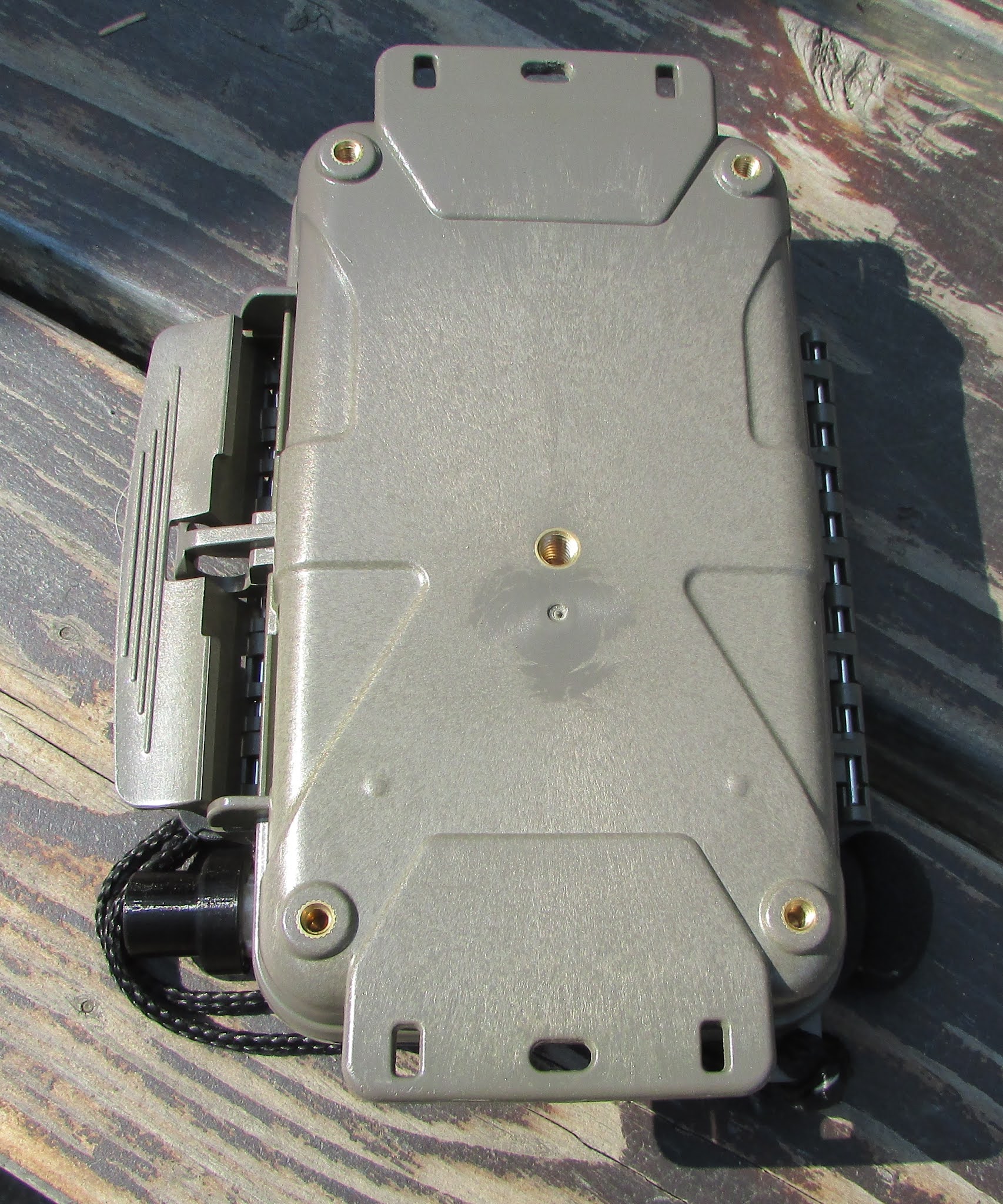
Andrew Dobson of Titley Scientific was kind enough to lend me a beta model of their forthcoming new machine, the Anabat Chorus. I've long been quite keen on Anabat equipment - it's not perfect (what is?), but Titley tend to listen carefully to customers and build on what they learn from each model. The Chorus is a good example. At first sight the case looks similar to the Swift and Express models, both of which are a pig to open, as the latches are incredibly tight - a necessity, to seal the case against moisture ingress. The solution is rather elegant - a large lever-type arrangement applies one of those first physics lessons we learned at school and makes opening and sealing the case much easier. There are also pierced flanges top and bottom, increasing the options for attaching the case to a substrate, especially useful for longer-term installations.

Inside the case, at first sight it seems similar to the Swift and has most of the functionality, but instead of the sexy (and costly) touch-screen, the screen is more basic, with up/down/left/right buttons. The battery case takes four AA batteries, but with Eneloops (the rechargeables of the gods), that should give many weeks of recording, in fact Titley claim 40 nights is possible. And they've retained the easily accessible back-up battery, so you can change it yourself when needed. As with most equipment nowadays, GPS is built-in, ensuring that that accurate sunset and sunset times can be depended on. There's also a temperature sensor, though personally, I rarely trust the data from in-built sensors. The detector is not always in the best location to get sensible data, so I tend to use a separate temperature datalogger in a shady spot nearby.


The interior of the machine and the controls - essentially a budget version of the Swift controls, but without losing anything vital that I could find


Rear view, showing the pierced mounting flanges and the lever arrangement, for opening the case with breaking a finger

In use, I found it to function exactly as expected, with similar funtionality to the Swift, using the control panel to select simpler timing options or a new software package to allow custom settings. As with the Swift, you can record ultrasound as .zc or.wav. There was a little distortion in the recordings, though this was probably due to reflections off the case. You can't use an extension lead with the microphone, as with the Swift, but Dean Thompson from Titley advises that there'll be an optional goose-neck extension to move it away from the case and reduce this effect. 


The optional microphone gooseneck
(photo copyright Titley Scientific)

I'm happy to say that they have retained that wonderfully simple crowd-pleaser, the little magnet on a string. This allows you to check the machine is functioning properly once it's in position - rarely essential, but massively reassuring before you walk away, trusting that when you return in three weeks time the detector will have recorded as expected.

Considering that the Chorus will retail at £595 +VAT I was a bit bemused as to where the savings had been made, by comparison to the rather pricey Swift (currently £1194 + VAT from NHBS).  According to Dean, the main differences are:

  • You can't use an extension mic lead (the gooseneck will cost extra)
  • The machine can only use 4 AA batteries, unlike the choice of 4 or 8 with the Swift.
  • It only has one memory card slot, instead of two (but with the massive capacity cards now available, that's hardly a problem).
  • You can only record from one microphone at a time.
What's this I hear you ask? "One of two microphones"? The Chorus has an acoustic microphone as well as an ultrasonic one, giving you the chance to record birds, frogs, crickets or whatever else takes your fancy (for £200 less you;ll be able to get one with just the acoustic mic). It has the same ultrasonic microphone element as the Swift (though they're not interchangeable). 

One concern I have is that the microphones seem quite vulnerable, as they are attached to mouldings on the case. The Swift and Express come with excellent protective carry-cases, but apparently that won't be the case for the Swift, so I think a protective case to store and transport it will be an essential extra.


In this view you can see the two microphones, ultrasonic on the left, acoustic on the right.


Overall I was quite impressed with what we'll get for the price-point. I was also impressed that most of what has been removed to get the price down is unlikely to be missed much and that Titley have taken the opportunity to add some simple enhancements that improve the package. It's disappointing that the gooseneck microphone mount will be an additional cost over the basic price, but they are going to have Wildlife Acoustic's Songmeter Mini to compete with and I reckon that will be a fair fight. 

The machine I was trying out was a beta model, so the final product may be slightly different. And if you want a seriously techie appraisal you'll need to look elsewhere - my musings here are for those of us who want to actually use the machine, rather than devour the specifications! But if that floats your boat you can find the full specification on Titley's website: Anabat Chorus


Keep up to date with the latest posts Facebook.com/Davidsbatblog

PS - the photos above show a foam sock on the ultrasonic mic, but it belongs on the acoustic mic (when I tested it, it was on the correct mic!)


Wednesday, 28 April 2021

The harbingers of spring, heralding bat surveys

In spring each year I, like most bat-workers champ at the bit, waiting for the survey season to kick off in May. I can't resist looking at some of my favourite roosts, to see if any bats have arrived yet.  A couple of weeks ago I spent a fruitless evening watching the roof of our cottage, to see if any of our resident Common Pipistrelles had showed up yet - they hadn't. 

Last week Charlotte Meyer-Wilson and I visited one of our favourite Soprano Pipistrelle maternity roosts to see what was happening. In summer around 1,000 bats occupy this roost, but we were happy to see 13, especially as we were playing with an infra-red video camera, which allowed us to see into the roost entrance and watch the bats moving around and interacting, prior to emerging.


It's at this time of year that I watch out for what I think of as the 'harbingers of spring' - three common hedgerow plants that flower early and stand out, each one showing that the bat season is a little closer.

The first to appear is Coltsfoot (Tussilago farfara), its cheerful yellow flowers poking through the flattened mat of last year's dead vegetation. Its chunky, scaley stem is almost a reminder that it's tough and flowers before anything else round here.


After Coltsfoot, the next harbinger of spring is the Lesser Celandine (Ficaria verna), with shining petals and glossy cordate leaves. It's slightly scruffy flowers alwyas make me wonder if they were built on a Friday afternoon.


My third botanical harbinger of spring is Garlic Mustard (Alliaria petiolata). Following on from the other two, the speed at which their tall stems zoom up in every hedgerow is amazing, allowing them to flower and set seed before they’re overwhelmed by the mass of species that follow. 


When garlic mustard shows I know that within 1-2 weeks the hedgerows will, for a brief period, be awash with swaying white Garlic mustard flowers. And that means it's time for the bat survey season to start, which puts an even bigger smile on my face!

Keep up to date with the latest posts Facebook.com/Davidsbatblog