Keep up to date

Keep up to date with the latest posts David's Bat Blog on Facebook

Showing posts with label passive monitoring. Show all posts

Thursday, 9 September 2021

The forthcoming Anabat Chorus - first impressions

Fifteen years ago, if you wanted to do passive monitoring of bats you had three options - the proven and dependable sandwich-box-shrouded Anabat SD1, with it's ZC recording system (seems clunky now, but was heaven-sent in those days of memory-deprivation and snail-like computers) or the Songmeter SM2 from the then new kids on the block, Wildlife Acoustics. Option three was to cobble up some kind of half-baked system with a basic detector plugged into a dictaphone and plenty of us dabbled with that sort of thing! Today  however, the marketplace is full of options and new models keep trickling onto the market.

Wildlife Acoustics recently launched the Songmeter Mini and I'll say more about that in another post, but there is a clear move towards lower-cost passive monitoring machines, possibly in response to the development of the incredibly low-cost Audiomoth. When you can buy a passive detector for thirty quid (extra for the polythene bag to hang it in!) then £1300 or more seems excessive. However, for professional work the Audiomoth seems an uncertain option, with too much geekery involved. Though that will probably change in time, it creates an opening for the manufacturers to slide in new mid-range passive detectors, drawing on their experience and reliability. 


The new Anabat Chorus

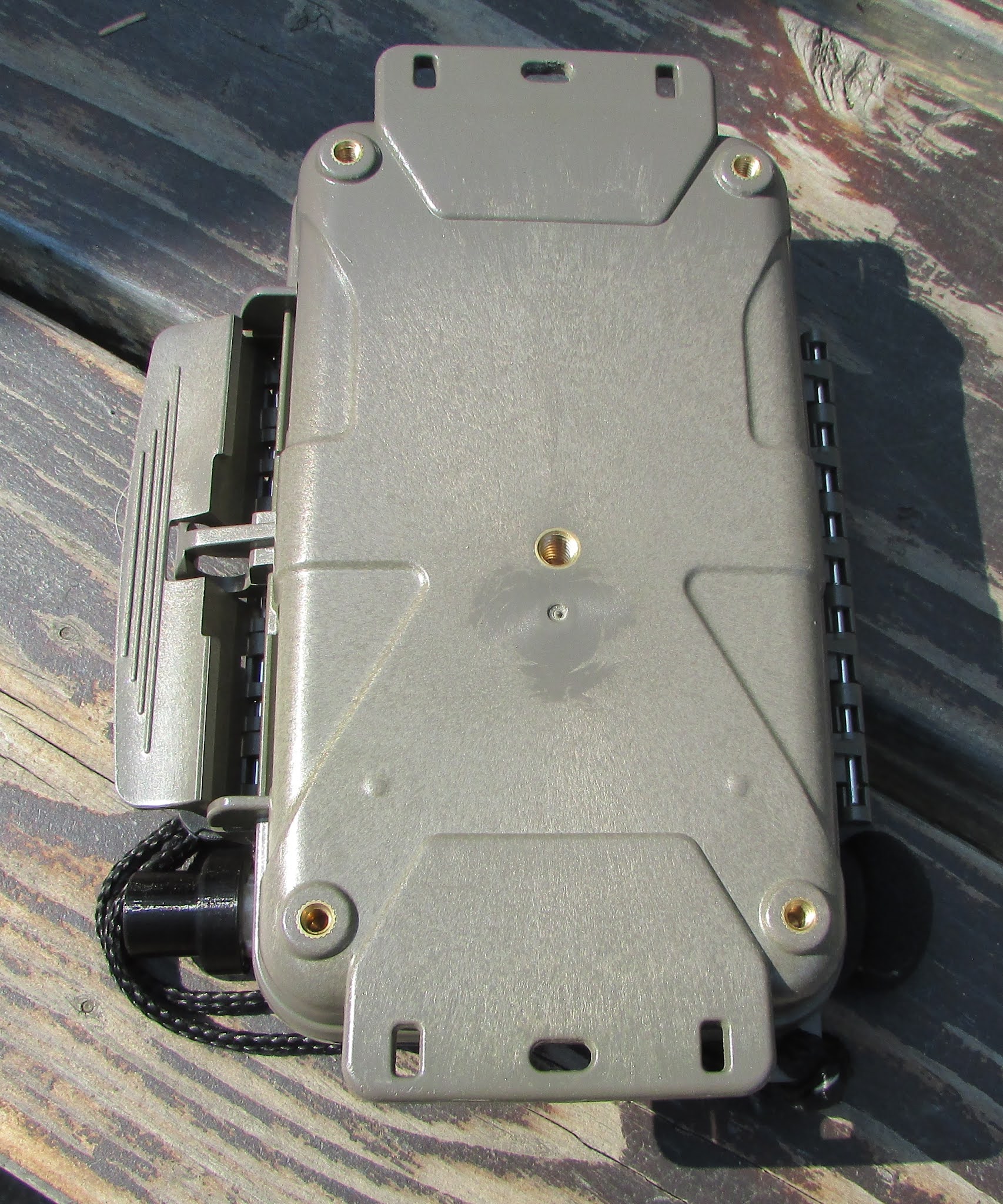
Andrew Dobson of Titley Scientific was kind enough to lend me a beta model of their forthcoming new machine, the Anabat Chorus. I've long been quite keen on Anabat equipment - it's not perfect (what is?), but Titley tend to listen carefully to customers and build on what they learn from each model. The Chorus is a good example. At first sight the case looks similar to the Swift and Express models, both of which are a pig to open, as the latches are incredibly tight - a necessity, to seal the case against moisture ingress. The solution is rather elegant - a large lever-type arrangement applies one of those first physics lessons we learned at school and makes opening and sealing the case much easier. There are also pierced flanges top and bottom, increasing the options for attaching the case to a substrate, especially useful for longer-term installations.

Inside the case, at first sight it seems similar to the Swift and has most of the functionality, but instead of the sexy (and costly) touch-screen, the screen is more basic, with up/down/left/right buttons. The battery case takes four AA batteries, but with Eneloops (the rechargeables of the gods), that should give many weeks of recording, in fact Titley claim 40 nights is possible. And they've retained the easily accessible back-up battery, so you can change it yourself when needed. As with most equipment nowadays, GPS is built-in, ensuring that that accurate sunset and sunset times can be depended on. There's also a temperature sensor, though personally, I rarely trust the data from in-built sensors. The detector is not always in the best location to get sensible data, so I tend to use a separate temperature datalogger in a shady spot nearby.


The interior of the machine and the controls - essentially a budget version of the Swift controls, but without losing anything vital that I could find


Rear view, showing the pierced mounting flanges and the lever arrangement, for opening the case with breaking a finger

In use, I found it to function exactly as expected, with similar funtionality to the Swift, using the control panel to select simpler timing options or a new software package to allow custom settings. As with the Swift, you can record ultrasound as .zc or.wav. There was a little distortion in the recordings, though this was probably due to reflections off the case. You can't use an extension lead with the microphone, as with the Swift, but Dean Thompson from Titley advises that there'll be an optional goose-neck extension to move it away from the case and reduce this effect. 


The optional microphone gooseneck
(photo copyright Titley Scientific)

I'm happy to say that they have retained that wonderfully simple crowd-pleaser, the little magnet on a string. This allows you to check the machine is functioning properly once it's in position - rarely essential, but massively reassuring before you walk away, trusting that when you return in three weeks time the detector will have recorded as expected.

Considering that the Chorus will retail at £595 +VAT I was a bit bemused as to where the savings had been made, by comparison to the rather pricey Swift (currently £1194 + VAT from NHBS).  According to Dean, the main differences are:

  • You can't use an extension mic lead (the gooseneck will cost extra)
  • The machine can only use 4 AA batteries, unlike the choice of 4 or 8 with the Swift.
  • It only has one memory card slot, instead of two (but with the massive capacity cards now available, that's hardly a problem).
  • You can only record from one microphone at a time.
What's this I hear you ask? "One of two microphones"? The Chorus has an acoustic microphone as well as an ultrasonic one, giving you the chance to record birds, frogs, crickets or whatever else takes your fancy (for £200 less you;ll be able to get one with just the acoustic mic). It has the same ultrasonic microphone element as the Swift (though they're not interchangeable). 

One concern I have is that the microphones seem quite vulnerable, as they are attached to mouldings on the case. The Swift and Express come with excellent protective carry-cases, but apparently that won't be the case for the Swift, so I think a protective case to store and transport it will be an essential extra.


In this view you can see the two microphones, ultrasonic on the left, acoustic on the right.


Overall I was quite impressed with what we'll get for the price-point. I was also impressed that most of what has been removed to get the price down is unlikely to be missed much and that Titley have taken the opportunity to add some simple enhancements that improve the package. It's disappointing that the gooseneck microphone mount will be an additional cost over the basic price, but they are going to have Wildlife Acoustic's Songmeter Mini to compete with and I reckon that will be a fair fight. 

The machine I was trying out was a beta model, so the final product may be slightly different. And if you want a seriously techie appraisal you'll need to look elsewhere - my musings here are for those of us who want to actually use the machine, rather than devour the specifications! But if that floats your boat you can find the full specification on Titley's website: Anabat Chorus


Keep up to date with the latest posts Facebook.com/Davidsbatblog

PS - the photos above show a foam sock on the ultrasonic mic, but it belongs on the acoustic mic (when I tested it, it was on the correct mic!)


Saturday, 21 August 2021

Looking after your bat detector - guest blog by Andrew Dobson

Andrew Dobson is the UK face of Titley Scientific, the company which makes the Anabat range of bat detectors. I've known Andrew for over a decade and every time I meet him he always has some useful tip, or else a sad tale of us non-engineering ecologists ill-treating his beloved equipment. I persuaded him to distil some of these hints into a guest blog for us.


Deploying a remote download system back in 2013


8 years ago, I found myself taking over Titley Scientific UK & European distribution, selling and servicing Anabat bat detectors. After emigrating to Australia in 2007, it was 2012 and time to come back to the UK - especially with the arrival of a new baby. Around this time, Titley Scientific was being taken over by the Australian company I worked for. They needed someone in the UK to look after things and I thought to myself, ‘why not?’ Moving to Australia in the first place was a massive risk, hence, coming back with a job opportunity this time was hard to refuse. 

By this point, I had almost 20 years experience in electronics. Fortunately, this meant fixing Anabat bat detectors was relatively straightforward for me, just slightly different to work I had done before. As comfortable I may be with anything electronically related, I will admit that I am no salesman. Personally, I do not really believe people working with this equipment need a ‘shiny salesman’, but more of an honest and genuine person who tries their best. People like Chris Corben and Richard Crompton were around well before me, promoting all things Anabat. From this, the community was already aware of Titley products, which gave us the best chance of succeeding. In fact, everything was there for me. The only shortfall I could see was the technical expertise needed in the UK and hopefully I filled that gap.

Since starting, I have had some amazing experiences all over Europe and met many amazing people. In particular, I remember being in a cave in Portugal, where was told to close my mouth if I did not want bat pee in my mouth! This was definitely a highlight for me. 

Like any career serving people, I have had the odd difficult customer or made the odd mistake, but in general I think I have done well. I try my best and most people appreciate that. Chris Corben is the brains behind the original Anabat kit and is still working hard to help along with the team in Brisbane. Chris cannot help enough and I will always be grateful for his help. 

Within a few weeks of starting, I found “David’s Bat Blog”, and decided to make contact. David was a friendly and welcoming contact, so I gravitated to his hospitality. Back in 2013, we deployed a remote download system and solar panel near him, which recorded bats all year round  – I never quite managed to get a go in his glider but hopefully there is still time for that :-)    

8 years in and I have probably taken apart more bat detectors than most, so when David asked for a guest blog post it made sense to try and make it useful and talk about what I know (not bats!). Here are some pointers to help folk care for their field kit and avoid common errors: 

Disclaimer: I only work on Titley products, but in general all bat detectors on the market need a sensitive microphone element and run on batteries, so this info is useful for most bat detectors regardless of brand.  Also, the vast majority of units sold do not fail, I am only talking about a very small number. 

Batteries  

Leaking alkaline batteries and resulting damage in an Anabat Express


Alkaline batteries leak, that is pretty much it. If you would like to use them then that is always the risk. This is mainly due to being run flat, left in kit or get too hot. Electrolyte comes out and eats everything it its path. SD1’s were forever coming back with heavy corrosion. I soon found out people thought leaving them with AA’s in all winter was a good idea as it prolonged the life of the clock battery. This is, in fact, the absolute worst thing to do, as they eventually run flat and leak. There was some myth that leaving them would prolong the clock battery, but this is only true if the unit is turned on. Now we have the Anabat Swift, this has amazing battery life and can work on 4 or 8 AA’s. The downside is, if you fit 8 AAs and have just one the wrong way, it will work fine due to the voltage still being within the correct range, but that one alkaline fitted backwards leaks immediately and can really damage the detector.

If you must use Alkalines, here are some musts!

1.      Check and double check they are fitted in the correct orientation.

2.      Take them out when not in use.

3.      Avoid the pack of 40 that are unbelievably cheap.

 You can even see what the battery voltage is in the menu, so maybe its worth spending a few seconds checking its around 12v with new batteries.

I recommend Eneloop rechargeables where possible, and to clean the contacts with a pencil eraser from time to time. If you cannot get Eneloop, stick with well-known brands. Why risk buying “amazing value sponsored batteries” that Amazon are trying to push on you?  

Microphones

By definition, microphones are delicate sensors that convert sound waves into an electronic signal.  Pointing one of these to the sky for 6 months in all weather, and expecting it to be consistently sensitive from start to finish is probably a mistake! All manufacturers say, “weatherproof/waterproof”, but also caveat that with, “avoid something or other”. In my experience, it is best to avoid all rain to get the most out of them. Obviously, this is not always possible, so pointing away from prevailing weather and slightly down (omnidirectional mics pick sound up from all around anyway) is your best bet. Water building up on the microphone will also block the sound from getting through until it dries out, so your recording quality will suffer. Make sure you read and follow any microphone care instructions provided with your equipment.

Corrosion

Most passive detectors (the type that you leave out in the field) are now waterproof, so prevent wetness getting inside. This generally means they are pretty good at preventing moisture getting out as well (some now have vents for this). Opening them in the pouring rain, then getting the inside wet and closing the waterproof case traps the moisture inside. This is when it can go to work corroding everything, but mainly the power connections, as they can get slightly warmer than elsewhere. Active detectors (the type you use while carrying around) are generally not waterproof and care should be taken to avoid getting them wet.

SD cards

They get old and slow, then slow detectors down and cause issues. It helps to re-format them from time to time. For tiny zero crossing files this is usually not an issue, but full spectrum .wav files are 1000 times bigger, so speed is king. Go with class 10 and a write speed of over 120mb/s. Also, never EVER use those horrible micro SD cards in those crappy holders, you are introducing another dozen tiny connections that can fail!

It’s not working

If it is not working, unfastening, or responding to your presses; generally using 10 times more force is not the answer. If the microphone does not unscrew, it is probably not a good idea to use enormous pliers. When things do not work as normal, just give it a few seconds and try again. Maybe even take the batteries out, give it a few minutes and try again. Bat detector manufacturers do not have the resources of Apple or Samsung, but will always help you to get issues sorted out as soon as possible. With bat detectors, generally check for firmware updates at the start of every season, unless the product is brand new. You could also subscribe to email notifications for firmware updates where possible (Titley does this).

Service in Winter

Requesting your kit to be checked or serviced the day before the season starts does not help anyone. Particularly, since, whoever is servicing them probably already has plenty of work to do. Sending kits to be serviced in winter gives plenty time to have them looked at and fixed. They can also have their alkaline batteries that were left inside since September removed and disposed of.

Respect your kit

It’s that simple, just look after it. Store it in a dry place at room temperature, keep it clean and take batteries out when not in use. After use, if the case & mic are wet, leave it open with the mic still fitted for a day or two if possible. If it comes to the point you need to return something, wrap it accordingly – couriers like to damage things!

Hopefully, that helps a little to get the most out of your kit and save yourself some money in repairs. Each new product we release has improvements on the last, so progress is being made to help. Our latest will be the Chorus, which is our entry level passive detector. Its design builds further on our years of experience making and servicing bat detectors.


The new Titley Chorus bat detector & acoustic recorder


Titley Scientific on Facebook

Titley Scientific website


Andrew has kindly lent me a prototype Chorus to try out - I'll post some thoughts about it very soon.


Keep up to date with the latest posts Facebook.com/Davidsbatblog

Monday, 2 February 2015

The new generation of unattended bat detectors

It's been a little while since I wrote a blog post, which has irritated me as I have a host of subjects I want to write about, but so little time to do it. However, the inevitable bat worker calendar effect has happened and I am looking out of the window at deep snow and reflecting on the fact that my "to do" list is the shortest it has been for about a year. This wonderful situation won't last long so I'd better get blogging!

Back in 2011 I wrote about the rivalry between Titley Electronics and Wildlife Acoustics, whose Anabat SD1/2 and Songmeter SM2BAT were at that time the only realistic options for unattended monitoring of bat calls. Both machines had strengths and weaknesses, both were (and still are) very widely used by ecologists and bat researchers.

In the past year both companies have launched new unattended bat detectors. In both cases they seem to have listened to customers in an effort to improve on their previous models. It is interesting that the result of their market research has been very different. Wildlife Acoustics moved up-market with a signficantly more expensive machine, the SM3BAT and Titley went for a smaller and cheaper machine, the Anabat Express. I am fortunate enough to have had my hands on both machines for the past year and have had an opportunity to put them through their paces.

Wildlife Acoustics' Songmeter SM2BAT and the slightly improved SM2BAT+ have achieved much popularity in the UK and elsewhere in recent years. Their price tag of around a thousand pounds made them cheaper than the Anabat SD2, though still expensive for non-commercial users. Their ability to record from two microphones at once was attractive, especially for those wanting to record at height and at ground level simultaneously and the fact that they recorded to SD cards, rather than the dated CF cards used by Anabats was also attractive. However they were complex to use, requiring careful setting up and were easy for the inexperienced user to get wrong.

Perhaps Songmeter's most attractive feature compared to the Anabat was that they came in a waterproof case, whereas Anabats needed an additional weatherproof box - Pelicases for the well-heeled, sandwich boxes for others! The  Songmeter's big selling point was that it arrived oven-ready, without the need to fabricate a waterproofing solution. However they suffered from condensation at times and the internal memory card holders were vulnerable to damage when inserting the massive D cells the machines use. Exposing the internal workings of the machine to change batteries or memory cards in inclement weather was hardly ideal, though the SM2BAT+ model had it's internals sprayed with a water-repelling coating to improve this.


Anabat SD1 and SD2 models need additional waterproofing for unattended use. This sandwich box is the low-tech approach!


An SM2BAT mounted at the base of a mast, with one microphone attached and another at the top of the mast, connected by a cable.


Unlike Songmeters, Anabats (this is an SD1) can also be used for transect work.

The Anabat SD2 (and the previous SD1 model) by comparison, though about 35% more expensive was more robustly built (waterproofing aside) and much easier to use, reducing the risk of expensive repeat surveys. They also use standard AA cells, rather than the larger D cells used by Songmeters (though both can also be connected to external 12v batteries for longer term use). They also have the advantage of being excellent for hand-held transect surveys, whereas the Songmeter can only be used passively.

So given all these pro's and cons I was intrigued to see what the two new machines are like and how the two manufacturers have responded to the feedback of their customers.

The Songmeter SM3BAT was the first of the new machines to reach me. One of the criticisms of its predecessors was that they were a bit "plasticky" and some parts were easy to damage. My first impression of the SM3BAT was that it had been cast in a furnace, rather than built! It's taller than the old machine and the case appears to be capable of withstanding having cattle tap-dance on it (a more common issue with this type of equipment than you might think), though I wouldn't recommend experimenting with that. It's also heavy at 2.5Kg without batteries. The solid metal casing includes holes for securing the machine, either by bolting it to a wall or by attaching it to something solid with a bicycle-lock style cable.


The SM3BAT in use. The microphone is at the end of the cable on the right, allowing the machine to be put out of sight if necessary.

The controls and screen are now on the outside of the machine, with robust plastic to protect them. Battery compartments and memory card compartments are accessed by removing waterproof plugs on the side, so that there is no longer any reason (or indeed any ability) to access the interior of the case. Thus several criticisms of the SM2BAT are removed - the new machine feels solid and robust, it gives confidence that it can cope with whatever is flung at it.

In use the SM3BAT is similar to the SM2BAT. It can record in ZCA (Analook) format, or in WAC or WAV formats. As before there are four memory card slots to allow you to provide the machine with plenty of space for the latter two memory-hungry modes. Wildlife Acoustics are proud of the fact that it is compatible with the latest generation of 256GB SD cards, providing potentially a Terrabyte of memory. A big criticism of the SM2BAT was the memory-hungry nature of Wildlife Acoustics' preferred WAC format. With advances in computer technology the ability to store and process large amounts of data has become steadily easier since then, though that burden should still not be underestimated if you plan to use these modes.

The SM3BAT comes with an upgraded microphone, which like the SM2BAT one is omnidirectional (a key difference to the Anabat SD1/2 microphones, which are unidirectional). However it is significantly bigger and can no longer be plugged directly into the side of the casing. Wildlife Acoustics advise it is more sensitive than their previous microphone.

Titley Electronics' new machine is the Anabat Express. They have chosen to produce something much more compact and with less visual impact than their competitors machine. The Express is a similar size to the old Anabat SD1/2 but is now in a camouflaged waterproof case. The case, though made of plastic is strongly made and similar to those used for camera traps. It now has an omnidirectional microphone, which is stored safely in a slot within the case and then screwed into the exterior for use. Unlike the SM3BAT the Express has a built-in GPS, which it uses to calculate sunset times (the Songmeters need to be programmed with their location to calculate this). This is a big step forward for Anabat. Titley's previous models could only be programmed to start and end recordings at fixed times, with no allowance for day-by-day changes in sunset and dawn times. Songmeters have the useful facility to start and finish at a set time in relation to sunset or dawn. Now the Express can do this, with the added bonus that it doesn't need to have latitude and longitude pre-programmed, as with Songmeters.


The diminutive Anabat Express, with a £2 coin for comparison.


The interior of the Anabat Express, including built-in instructions.

In use the Express is virtually idiot-proof (believe me, I'm an excellent measure of this). When we're out in the field, setting up equipment and it's cold or wet and we've been working all day even the best ecologist or bat-worker is liable to do something daft - we're only human after all! The Express even has step-by-step instructions pasted to the inside of the lid. All you have to do is connect the microphone to the outside, switch it on and wait for the GPS to get a signal. Then you cycle through three options for recording time (continuous, sunset to dawn or pre-programmed), close the case and you're ready for action. A cord attached to the case ends in a magnet, which can be used to check the machine is functioning correctly. A friendly blue light winks to confirm all is well when the magnet is placed in the right position on the case.

The Express uses standard SD cards, with no prior set-up, so formatting CF cards is a thing of the past. Of course, unlike the Anabat SD1/SD2 this machine isn't suitable for transect or other hand-held work - it's only effective as an unattended detector. It only records in ZCA format, so if you prefer to use audio recordings for analysis this is something to think about. Personally I prefer ZCA for most purposes. I'm not thrilled about the fact that you have to open it up to operate it - that was one of my criticisms of the Songmeter SM2BAT. However, the interior of this machine is far more robust than the SM2BAT and, like the SM2BAT+ the interior has been sprayed with a water-repelling coating.

So Titley have chosen to go for a low-profile, simple-to-use machine, whereas Wildlife Acoustics have gone for a big, solid, bomb-proof detector. Which would I buy? As ever it's a case of horses for courses. The SM3BAT suffers from high visibility but balances it by being massively robust. It would be hard to install it in a situation where theft or vandalism is a concern. Not only is it big and obvious it looks expensive. Your average thieving ned couldn't help but wonder what it will fetch on eBay. Although it can be securely attached to something, that wouldn't protect the controls or the battery and SD card compartments from interference. At over 2.5Kg before you put batteries in, you wouldn't want to carry a rucksack of these machines around a site for temporary installation. However you might choose it as the ideal machine for long-term installation on a met mast, or somewhere where unauthorised interference can be prevented.

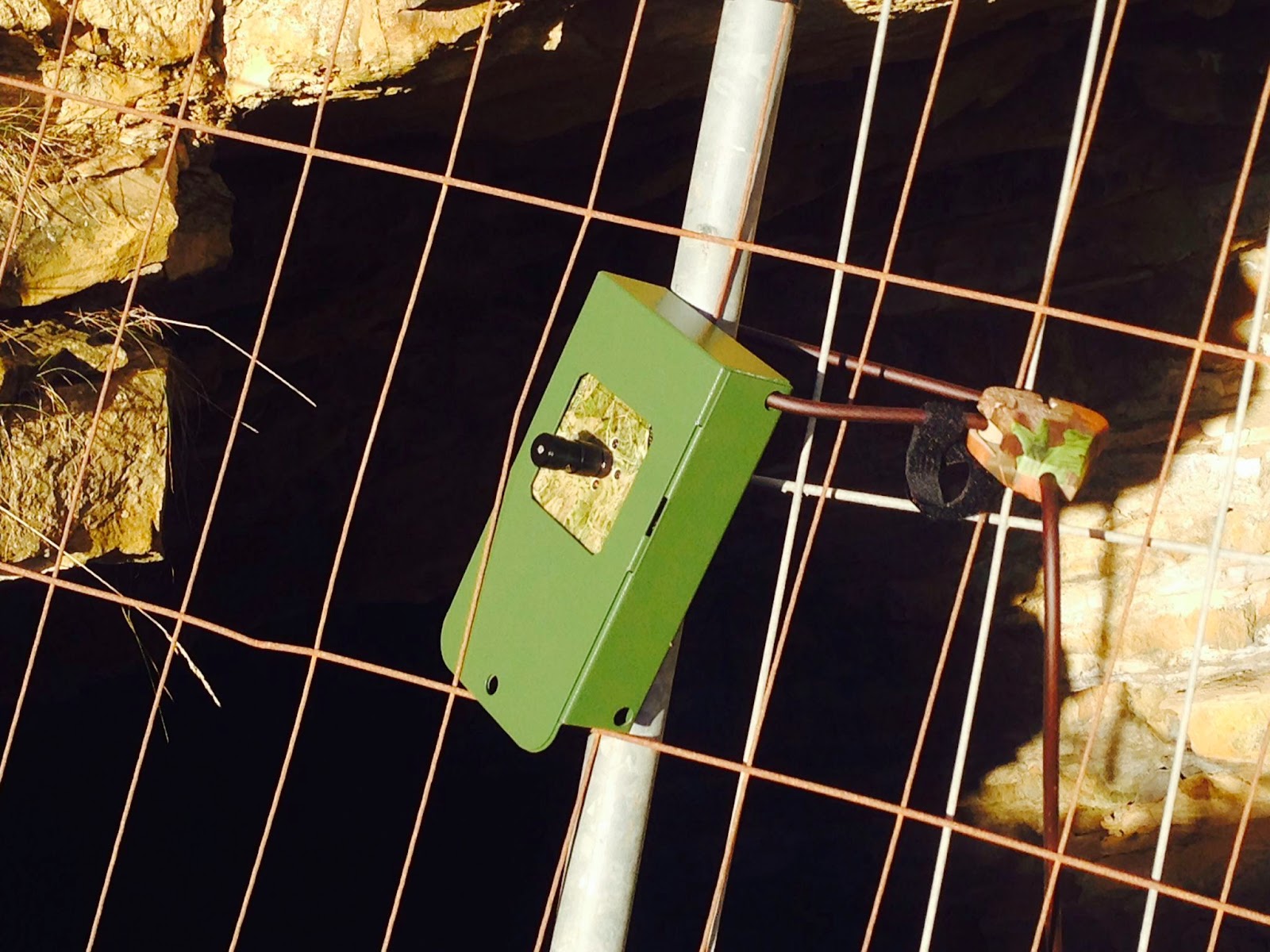
The Anabat Express on the other hand doesn't suffer from these security issues. It's small and camouflaged and therefore suitable for installation with low visual impact, perhaps in places with regular visitors. It comes in a protective zip-up case and you could happily carry a dozen of them with you all day. So for short-term, high risk installation it couldn't be better and I like many others already have several of them for that purpose. If you do want to install one in a higher-risk situation Titley sell a steel case and steel python cable, allowing you to attach it securely to something solid. The Express is also very easy to set up in the field, so the risk of mistakes is low. Unlike the older Anabats you don't need to worry about where the microphone is pointing and it lends itself to attachment to a tree trunk or similar.


An Anabat Express in use with Titley's optional security system

There are a couple of other issues to consider in comparing the two machines. One is power consumption, Wildlife Acoustics claim that the SM3BAT is less power-hungry than the SM2 models were and claim up to 20 nights on a set of four Alkaline D cells. It can also be used with an external 12 volt battery or power supply. The Express can last for up to 30 nights if you use Lithium AA batteries (high capacity Lithium batteries are not an option for D cells, so far as I know). you cannot connect an external 12v battery to the Express, so it's not a machine for long-term use, though 30 nights is a long monitoring period!

The other thing to consider is price. Wildlife Acoustics have abandoned their £1000 price point with the SM3BAT, which sells for over £1400. This compares with £660 for the Anabat Express. In other words you can have two Expresses for the cost of an SM3BAT and still have money left over. I supsect this is the clincher. Both are good machines, both appear to work extremely well and I have had no problems with reliability of either machine. But two machines for the price of one is hard to ignore, especially when the Express is also less likely to be stolen or vandalised and easier to deploy in numbers across a site. For bat groups and those working on a budget the decision seems like a no-brainer. But if you want a long-term installation or if you want something with a well-engineered and professional appearance perhaps the SM3BAT has something to offer.

It's particularly interesting that Wildlife Acoustics have now launched a smaller, lower-cost, ZCA mode only model called the SMZC. From the little I have seen it seems extraordinarily like an attempt to emulate the Anabat Express, though it still has the look of something made in a foundry and weighs 1Kg (the Express weighs 385g). It also lacks the GPS functionality of the Express, but is priced about 10% cheaper, so it may turn out to have something to offer.

Please note that all prices quoted include VAT and appear to be correct at the time of writing. All weights exclude batteries. 

See our website: David Dodds Associates Ltd

Thursday, 20 February 2014

Two steps up for bat monitoring?

I've written before about my hope that the rescue and revitalisation of Titley Electronics (makers of Anabat) would result in a shake-up of the market for unattended monitoring equipment. With Titley and Wildlife Acoustics (makers of the Songmeter) battling for the marketplace the winners will be those of us who use their equipment. With remarkable symmetry both companies have looked at their existing offer, listened to customer feedback and both are launching ground-breaking new machines. Interestingly they are also swapping places in the cost stakes.

Wildlife Acoustics appear to have addressed a lot of the issues with their SM2BAT with their new SM3BAT. With a die-cast aluminium case it will be more robust than the previous machine. They have also addressed problems with cumbersome access and risk of letting water inside the unit. The control and screen are now on the outside of the case, making them more accessible and the batteries now slide into slots in the side of the machine. 


The new Songmeter SM3BAT from Wildlife Acoustics
(Photo copyright Wildlife Acoustics)

The Wildlife Acoustics approach of recording in ZCA (Analook) format as well as in compressed WAV (audio) format is strengthened by a massive increase in memory to a Terrabyte, allowing those large files plenty of room for a change. Another problem with the old SM2BAT was the vulnerability of the microphones and W.A. have a new and more robust microphone for the SM3BAT. They also claim an improvement in power consumption and there is no longer a need for an adaptor to use an external battery.

It all sounds very promising. The downside is that they have abandoned the £1000 including VAT price point to pay for the improvements and I understand the SM3BAT will market at £1500. The new microphones are also double the cost of the old ones at £200 each. A big increase, but maybe worth it?

Titley are countering by moving downmarket with their new Anabat Express. At just £500 each you could buy three of these machines for one SM3BAT (though the SM3BAT can record from two microphones concurrently, if required). 


The new Anabat Express
(Photo copyright Titley Electronics)

Compared with the older SD1 and SD2 Anabats the Express is very different and, like W.A. Titley have listened carefully to customer feedback. A key reason why people started buying SM2BATs in preference to Anabats was the the Anabat's lack of integral weatherproofing. The Express is built into a stout weatherproof case, screen-printed with camouflage. The case is little bigger than the original Anabat machines, making it rather smaller and neater than the SM3BAT. The older chunky Anabat microphones have given way to a new and smaller mic. Happily Titley have finally given up on CF memory cards, moving to the ubiquitous and smaller SD card (in fairness they had already done this with the Roostlogger).

Titley also claim a significant improvement on power consumption and the Express uses 4 AA batteries. Oddly in the SM3BAT W.A. have chosen to carry on using 4 large and heavy D cells.


This interior view of the Anabat Express, with AA batteries in place shows how small this low-cost machine is. 
(Photo copyright Titley Electronics)

The Express also has built in GPS for the first time. It's not really a hand-held unit, so the purpose of the GPS receiver is to allow the machine to calculate sunset and dawn times, making it possible to programme the machine to start and stop recording at times relative to these, rather than fixed times. This was always a strength of the SM2BAT, compared to the older Anabats, which require regular reprogramming through the season.

It's great to see both companies listening and innovating and it will be interesting to see what these two new machines are like in practice. W.A. have a habit of making equipment complex to use in the field, which is fine if you're a bit of a techno-geek, but more of a problem if you're just an average bat worker. Titley's previous machines have always been relatively user-friendly, though the manuals for their previous models have been unintelligible! Whether all these innovations deliver the goods remains to be seen. Happily both manufacturers have been kind enough to offer me machines to try out.

On paper it looks like W.A. are aiming for the gold standard with the SM3BAT, though it's costly and more visible, therefore potentially vulnerable when left in the field. The Anabat Express, with its low price-point could be bought in quantity and its small size and camouflaged appearance makes it potentially less vulnerable. If both machines live up to their promise it could be a case of "horses for courses". For long-term placement on a wind farm Met mast the SM3BAT could be ideal. For large scale deployment over a site the Anabat Express could fit the bill. Time will tell...

Visit our website:www.daviddoddsassociates.com
For regular updates follow us on LinkedIn & Facebook
(David Dodds Associates Ltd) or on Twitter (@DavidDoddsAL)