Random musings about the world of bats and bat-workers from a professional bat ecologist, based in Scotland. Equipment reviews, bat humour, opinion and anything else that occurs to me.
Thursday, 14 April 2022
Freelance ecology - the money game
Sunday, 3 April 2022
What does the future hold for bat groups?
Like many licensed bat-workers, my journey commenced with membership of a local bat group. I was lucky enough to also get involved with a couple of research projects, which expanded my opportunities, but many of my earliest experiences with bats were gained by helping Lothians Bat Group with things like bat box checks, roost counts and hibernation surveys.
Bat groups have long been at the heart of bat conservation: local groups of like-minded people, coming together to devote time to monitoring and conserving bats, to encouraging the public to understand and care about them and of course, to training new bat-workers and giving them opportunities to work towards their own licenses.
Success for bat groups has always been a hit or miss affair. Like most voluntary groups, it all depends on having enough people who want to put in as well as to take out; on people with organisation and leadership skills and most of all, on people who can spare some of that precious commodity, time. Groups need committees of people, able to work together to arrange events, drive the group forward and inspire others to take part.
When I was first actively involved Lothians Bat Group had the benefit of Dr. Stuart Smith, who ran the group as a sort of benign dicatorship. Stuart was a great combination of encouraging mentor and organisational demon, so much so that everyone was happy with the status quo and things went swimmingly, until Stuart retired and moved away. Happily, the group is still active, unlike in some areas, where groups have folded. Like so many voluntary groups we have a committee of very busy people. We all have lots of other commitments: family, children, work etc and inevitably the bat group has to take it's turn. I suspect we all feel slightly guilty for not doing more, but there are only so many hours in the day.
Many of us who hold bat licenses also work in conservation and consultancy and, let's be honest, you have to be phenomenally keen to spend five days a week working with bats and still be willing to go out and do voluntary bat work. Many of us do it, but when I think back to how much more voluntary bat-work I did before I worked in the field it's quite thought-provoking.
In rural areas it is even harder, as human populations are more thinly spread and greater travel is necessary to meet. In one region I've been involved in, the same faces were committee members of the local amphibian and reptile group, bat group and badger group, further diluting the available time and effort available to each group. Good on them for keeping the flags flying though!
I have a sense that bat groups today are not as active as they were a decade or more ago (I hope I'm wrong) and that is very worrying. The Bat Conservation Trust are active in encouraging and supporting people to set up new groups and in running projects intended to raise awareness and encourage the creation and development of bat groups. Here in Scotland we have had a series of highly active Scottish Bat Officers, funded by NatureScot, who have done some superb work.
So what's the answer? Bat groups are essential to successful conservation. If we don't have gangs of enthusiastic bat-fanatics manning stalls at events, leading bat walks and helping roost owners and if we don't ensure that the next generation of these members are being inspired and trained, who will take up the slack? The SNCOs don't even have proper funding for their core roles. The NGOs never recovered financially from the last recession and we may be heading for another.
It seems to me that the only way forward is for everyone who cares about bats to do what they can, to contribute where they're able: even the smallest contribution of time and effort is nonetheless a contribution. Perhaps in this 21st century world, when our lives are increasingly time-squeezed, there needs to be bigger committees of people taking on smaller roles within a group?
Or perhaps someone in south-west England (where he now lives) could hunt down Stuart and clone him for us? Lots of him.
Keep up to date with the latest posts Facebook.com/Davidsbatblog
Saturday, 19 March 2022
To hell with birdies, I want BATS!
I wonder where the birdies is?
Cancel that - I don’t care,
But when will bats take to the air?
I’ve had enough - I want some hot.
All this tweeting is quite nice,
But I’ll ignore it in a trice.
It’s chips and chops I really like,
Hollow claps, clicks and suchlike.
My detectors polished til it gleams,
Batteries are charged, ready it seems.
‘Tis patience I am really short of,
I need some bats, to adore and love.
So, don’t keep me waiting, little bat,
‘Tis time to make your belly fat.
I’ll wait no more, I can’t, I vow,
So shift your butt and fly right now.
Keep up to date with the latest posts Facebook.com/Davidsbatblog
Tuesday, 8 March 2022
Driving to bat surveys - don't risk becoming a killer
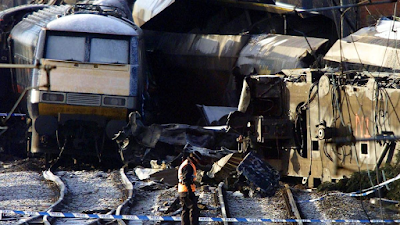
On 28 February 2001 Gary Hart was driving in the dark on the M62 motorway when he lost control of his vehicle. Later investigations revealed he was sleep-deprived and failed to apply the brakes. The car and it's trailer careered down the embankment onto the East Coast main railway line, where it was struck by an InterCity 225 train. Ten people died in the ensuing carnage and 82 were seriously injured.
Every year I hear stories from people who work in those consultancies (you know the ones I mean). They describe doing back to back sunset and dawn bat surveys, day after day, often with long journeys between and I can't help thinking of Gary Hart. He was sentenced to jail for five years, but I suspect a much bigger punishment for him was the knowledge of ten lives lost and 82 more whose lives were changed forever.
Selby was clearly exacerbated by circumstances, but imagine a head-on collision at 60mph. With a closing speed of 120mph it's entirely possible that you, your passengers and the family of five in the other car would all die or suffer life-changing injuries. And it would only take a moment's inattention.
With the new survey season approaching I thought it might be time to share a few thoughts on ways to limit the risks associated with driving to and from bat surveys at night, so here are my top ten suggestions.
1. Get to know what your level of tolerance is for fatigue and stay well inside it. How will you recognise when your abilities are impaired? You need to know. Be aware that your tolerance for fatigue decreases with age - I'm 56 and I can see a noticeable difference between now and a decade ago.
2. Heroes are those who save lives by being sensible. Pushing yourself beyond your limits to get that one last piece of survey work completed doesn't make you a hero - it definitely makes you the other thing.
3. Plan your workload and your sleep patterns. Within our team we avoid back to back sunset/dawn surveys like the plague and our full-timers are encouraged to take time off during the day to rest and ensure they are fresh when they need to be.
4. If you're under pressure to go beyond sensible limits you need to think carefully about what your options are, but you must address the issue. Dont fall into the trap of thinking it'll be fine, because one day it won't.
5. Do everything you can to keep your mind active whilst driving. I use talking books from Audible to help me stay alert - listening and thinking about what I'm hearing keep my brain fully functional. Music may help some people, but I worry that rhythmic sounds may be counter-productive.
6. If you have passengers in the car, get them to help. The best person ever for this (she knows who she is) was a member of our team who could sit in the front passenger seat and talk continuously and animatedly for two hours about her pet ferrets, horse-riding, pole-dancing, her various part-time jobs and heaven knows what else - it was impossible to doze off with that going on!
7. I hope your car's fully serviced. with good tyres etc, but there are things you can do to reduce your workload. Make sure your windscreen is clean - bugs, smears etc are much more obvious in the headlights and peering through a murky wind-screen is not going to help you.
8. Are your headlights clean? It is gob-smacking how much less effective they are with even a thin layer of traffic film. I use my headlight washers at least once every journey. If your car doesn't have washers then carry a wet cloth in a bag and wipe them before setting off in the dark. The more forward illumination you have the easier it is to focus on driving safely.
9. You're in a hurry to get home - aren't we all, when it's 2am and a warm bed is calling? You know what I'm going to say - drive to the road conditions and resist that massive temptation to put your foot to the floor, especially on winding country roads.
10. If you recognise that you're fatigued, whatever you do, don't press on regardless. I find power naps suprisingly effective. Recline your seat and set an alarm for 20 minutes (no more than that or you risk going into a deep sleep and waking up more tired than you started). Close your eyes and empty your mind. If that doesn't work then it's time to accept that you've got it wrong and either dig out the sleeping bag or find the nearest Travelodge.
Please don't think this is a definitive guide - I'm not a sleep expert or an advanced driving instructor. But we work in an industry that tends to overlook this issue or worse, treat it as a macho thing. And that's just plain stupid.
Keep up to date with the latest posts Facebook.com/Davidsbatblog
Wednesday, 5 January 2022
Getting into ecology - guest blog
Izzy McQuillan is a graduate ecologist at WSP, with a knack for communication. She recently condensed her experiences of gaining her first steps onto the ladder of professional ecology into a series of LinkedIn posts. They are solid gold advice for anyone looking to follow in her footsteps and Izzy has kindly combined them into a guest blog for David's Bat Blog.
![]() |
So this time last year, I saw my job role advertised on Linkedin and decided to take the plunge and apply.
I thought it would be useful to target some posts at current students, recent graduates and anyone trying to 'break' into ecology. There are a few useful tips that I wish I had known in my final year, or during my job search.

How much have you thought about your CV before popping it at the end of your application...
Following the application, where you have to fill in several boxes on 'How you align with the company ethics' and 'What skills do you have that make you suitable for this role', often you can overlook your CV and cover letter, when it fact, it could be the reason you are being overlooked yourself.
Some companies filter through job applications just looking at the cover letter, if you just have a few lines, your job application is going to get rejected.
So, some tips for your application from someone who has applied for lots and lots of jobs...
⭐Have you recently left university? Make use of their careers service, I went to the University of Manchester and we had 2 years post graduation to make use of the service. Get your CV checked, have a mock interview, speak to them about potential companies you should target.
⭐ Tailor your application. Make sure your CV is relevant to the job you are applying for, look at the words used in the advert and translocate these into your CV. Answer the points in the advert 'Must show excellent team-working skills'- use STAR (Situation, Task, Action, Response) and show HOW you have developed these skills. Problems I have seen with some graduate CVs is that they have one line about their degree. You've spent years, and thousands of pounds on your degree, make it work! Use bullet points and make everything cohesive, clear and accessible.
⭐The cover letter. What have you put in it? I was following the University career services guide on what to put in my cover letter, and it was actually causing me issues applying for ecology roles!
The format I previously followed was Paragraph 1- Where I had found the job, 2- What I know about the company and why I am suitable to work with the company, 3-Why I was suitable for the role. Then I changed my cover letter and I got an interview for my current role. As survey skills are so important in ecology, if your cover letter is missing these points, you won't be selected. In your opening paragraph, mention the experience I have mentioned previously is so important. Bullet point these skills. For example:
'Thank you in advance for taking the time to read my application. I have found XXX role advertised XXX. I am extremely keen to secure my first ecology role, as such I have recently developed skills in:
🦇Bat call sound analysis, using Kaleidoscope.
🗺️GIS skills, including the production of red line boundaries and Phase 1 maps on QGIS.
🌱Botanical skills, including identification of common hedge species such as Hawthorne, blackthorn and woodland indicator species such as Lords-and-ladies.
(All the above are free skills you can develop over the winter in order to be prepared for the upcoming ecological season)
So you're on Linkedin, you've found a role and company you want to work for and you've tailored your CV, now what?
How do you ensure you apply and can secure an interview?
Applying for roles can honestly feel like a job in itself. Each application can take hours; ensure you shift through the roles appropriately and allocate a few hours for the initial application. With consultancy, you will also likely have a skills based test post-interview which is still a part of your application.
Prior to my first graduate consultancy role, I was asked to produce a desk study of a site. Be prepared for this additional assessment when you put in your application. I was given a week to produce this report. During this week I was working full-time and it was also my birthday so I had to allocate time appropriately in order to ensure I didn't miss this role with a poor application. I visited the site in question, conducting a site walkover in addition to the desk study, this strengthened my report and impressed my future bosses. I secured the role.
During my ecology interview, I had a species test. I would say this is quite common within ecology. As a seasonal this should be common species you might see out on site (tracks or species images). Be prepared for this, have a research on Linkedin seeing what your potential future colleagues might share around species, you might be pointed in the right direction on what they might test you on.
And my last piece of advice?
Be yourself!
Remain professional but don't hide parts of your personality in order to 'fit in'.
If you are pretending to be someone you are not in order to secure this role, you will not feel comfortable at work. If you get rejected for being yourself, it isn't the end of the world. You are one step closer to finding a team that is perfect for you!
Don't be dis-heartened, I applied for so many roles over the years. I'd come close, had interviews but never got past that stage until 2020. Hopefully, these ideas help you.
Keep up to date with the latest posts Facebook.com/Davidsbatblog